
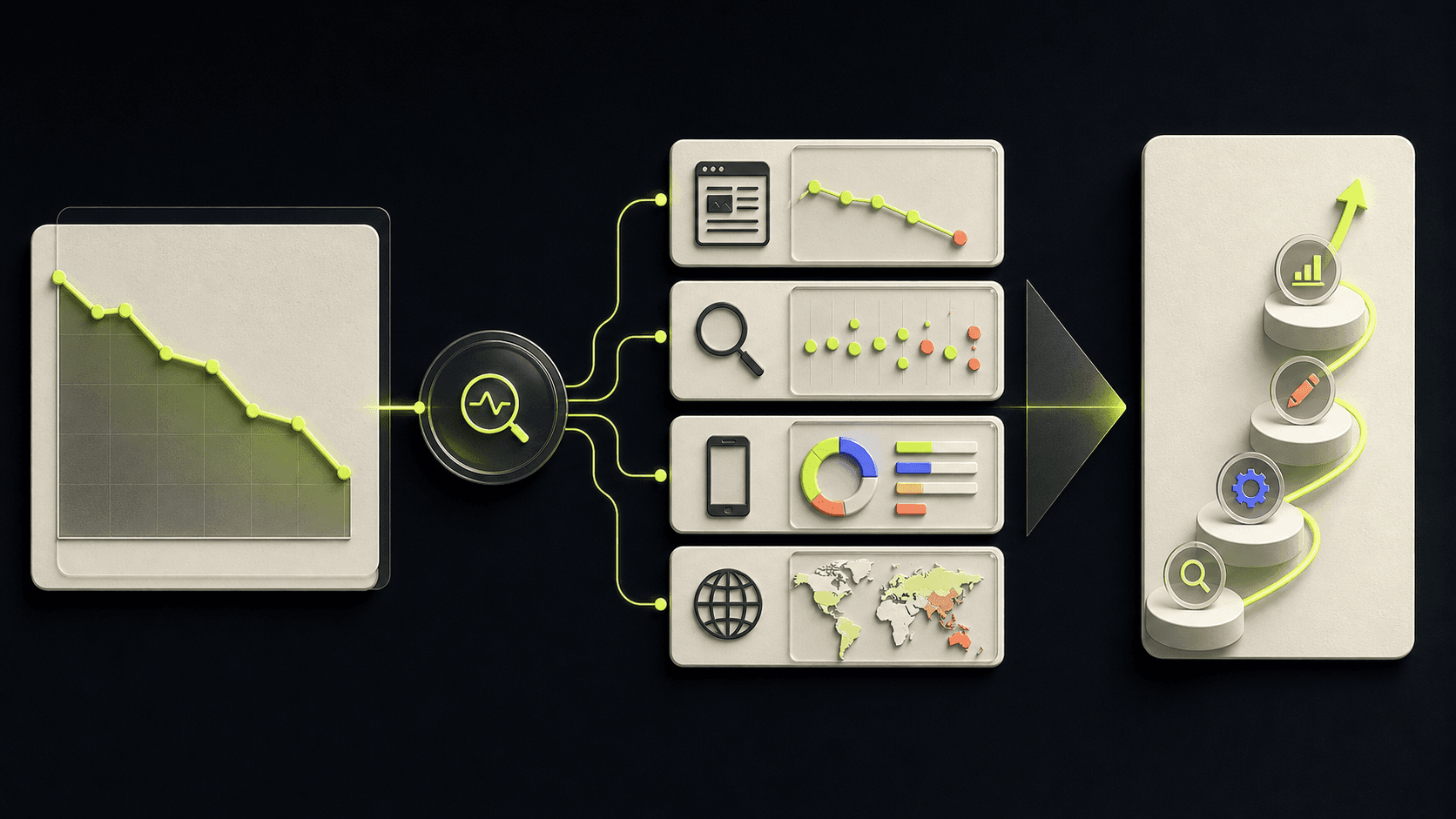
First, prove that the decline exists
Compare complete, equal-length periods and check whether the movement is outside the site’s normal weekly or seasonal rhythm. Confirm whether clicks fell, impressions fell, or only another analytics tool changed. Search Console and analytics platforms measure different parts of the journey, so disagreement is a diagnostic clue rather than automatic evidence that one is wrong.
Classify the shape of the loss
A broad decline across many directories suggests a different investigation from one page losing one query cluster. If impressions fell, investigate demand, indexing, and visibility. If impressions held while clicks fell, inspect position, snippets, search features, and query mix. If only one device or country moved, avoid a site-wide fix.
Check technical and external context
Review deployments, robots directives, canonicals, redirects, server health, migrations, and template changes. Compare dates with documented Search Console anomalies and Google ranking updates. An overlap strengthens a hypothesis, but it does not prove the update caused the loss.
Recover with the smallest credible intervention
Prioritize pages with meaningful lost clicks, clear evidence, and a fix you can measure. Restore missing internal links, repair accidental exclusions, improve a mismatched title, or refresh content that no longer satisfies the query. Change one coherent thing at a time and record the review window.